 · EST. 1998
Custom Clothing Production in Turkey: What Our Istanbul Atelier Can Make for You
The catalogue is the visible part. Behind it is a production house that has patterned, cut and sewn womenswear in Istanbul since 1998. This is a plain statement of what it can make for you, on what terms.
Buyers who find us through the catalogue often ask the same second question: "Can you also make this?" — a photo from a competitor, a sketch, a model they sold out of last season. The honest answer is usually yes, with conditions. This article sets those conditions out in one place, so you know before you write to us what we produce, in which sizes and fabrics, from what quantity, and how long it takes.
Everything below is the same information that lives on our custom production page, FAQ and partnership page — collected here as a single reference.
Who is actually producing
Disentis Modest is a manufacturer, not a reseller. Design, pattern-making, cutting and sewing happen under one roof in our own Istanbul atelier, backed by a network of partner workshops built over decades of working side by side. Every style in the wholesale catalogue comes off that production line — which is why the same house that packs a boutique's first $400 parcel can hold weekly production for a chain.
Plus-size has been our only discipline since 1998. That matters for custom work more than for stock: a pattern that flatters at size 38 has to fall identically at 56, and that grading skill is the part most factories get wrong. Our catalogue runs EU 34–60; custom production can cover any size range you need.
What we make
Product types
The production request form lists the categories we work in most, and they are a fair map of the atelier's strengths:
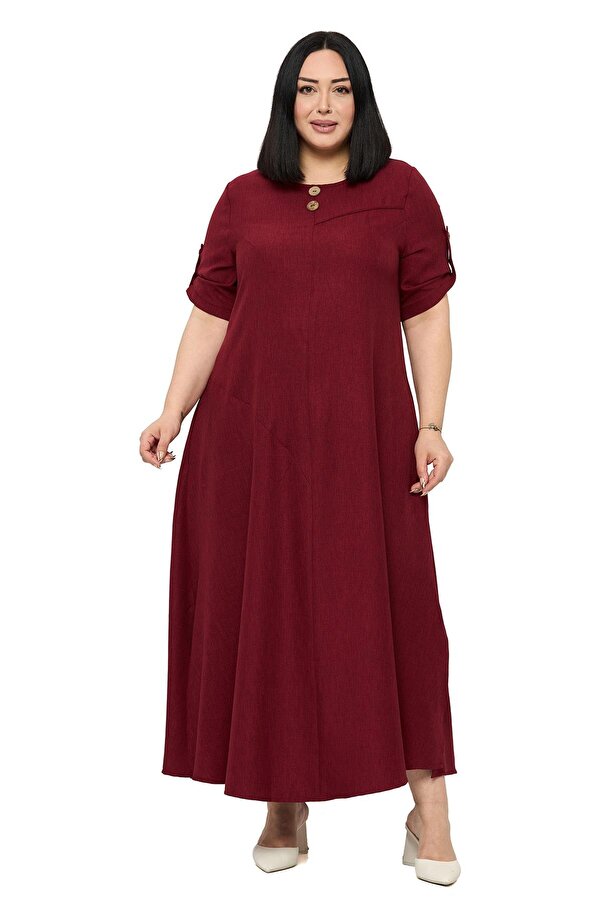
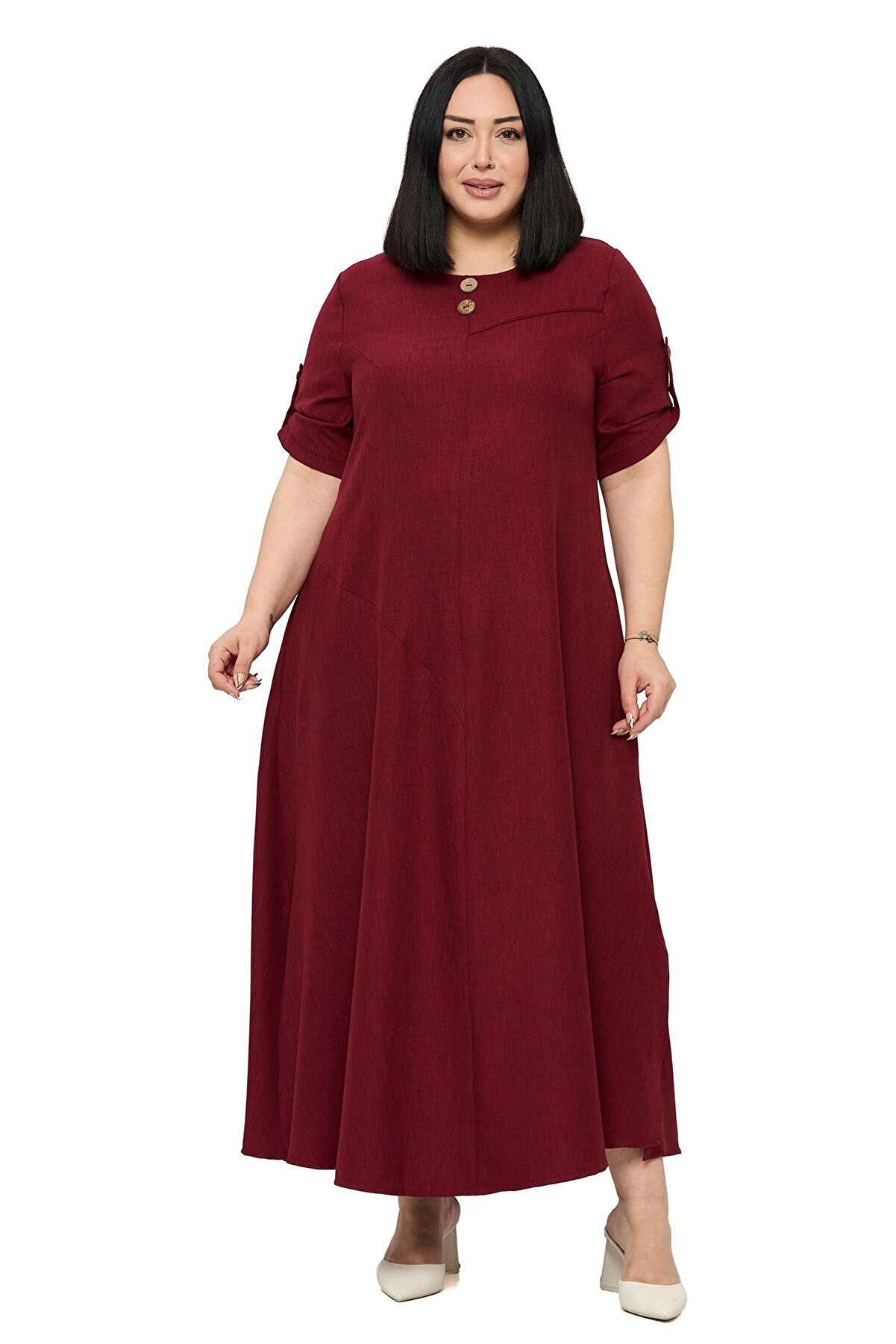
- Dresses and abayas — day, occasion and modest lengths, in plus-size grading or your own size curve.
- Shirts and blouses — our largest catalogue category, with the widest pattern library to adapt from.
- Suits and co-ord sets — matching two- and three-piece sets, the highest-rotation product in many boutiques.
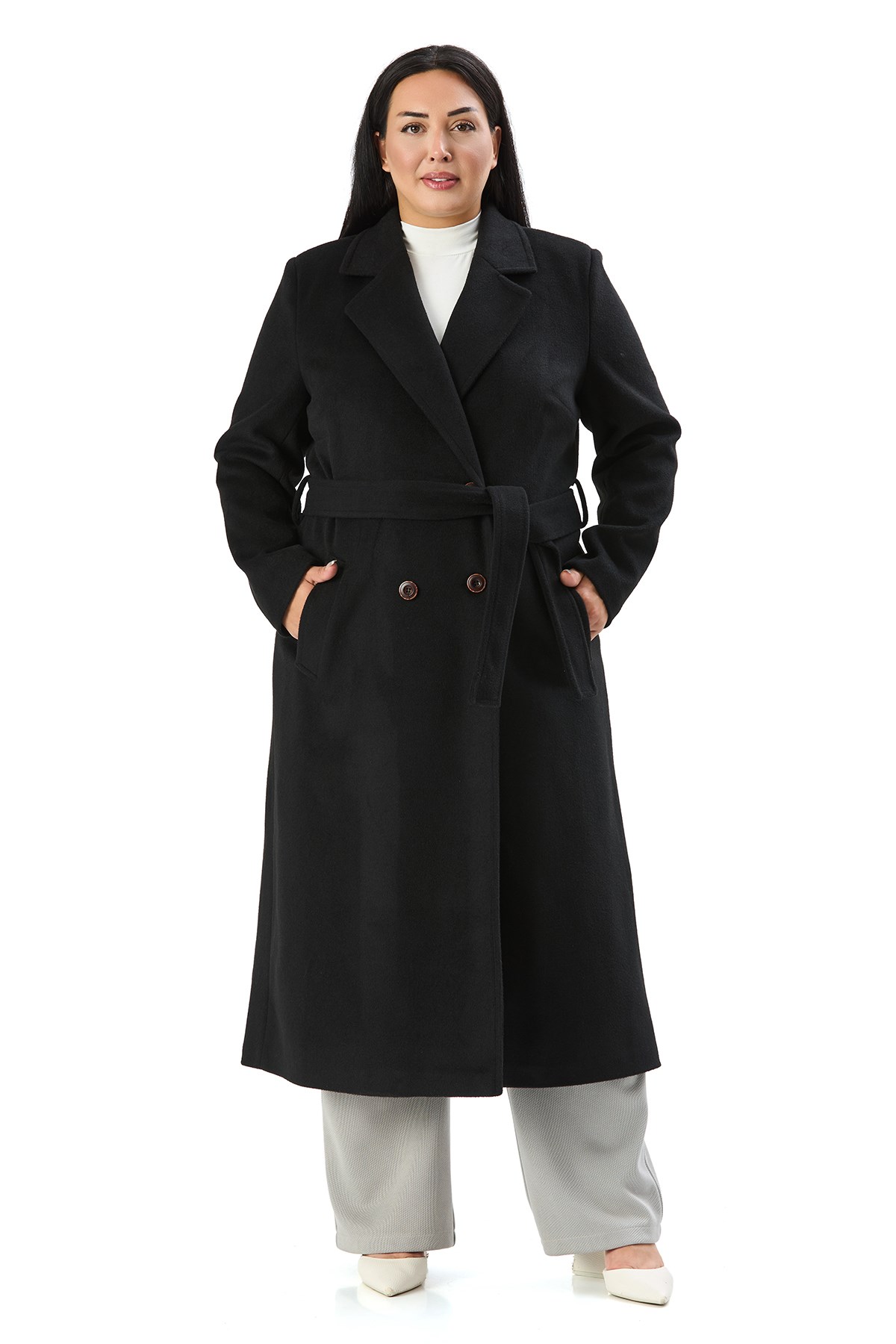
- Outerwear — jackets, coats and vests, lined and unlined.
- Skirts and trousers — including elasticated and shalwar-cut constructions that plus-size customers ask for.
- Sportswear and uniforms / workwear — produced to a brief, quoted per product.
- Private label — your label on our existing models, or on a model developed for you.
- Other textile products — tell us what it is; you get a yes or no within one business day.
If your product is not on this list, the form has an "other" option for a reason. We would rather give a fast, honest no than a slow, mediocre sample.
Sizes
Sizes 34–60 are the specialty, and for most brands that is the reason to come to us. But grading is a skill, not a fixed range: if your market runs 36–54 or you need an extended curve above 60, say so in the brief. Our size guide explains how Turkish sizes map to EU, UK and US so your size table and ours mean the same thing.
Fabrics
Viscose, satin, chiffon, gabardine and related wovens and knits are what we select, test and cut every week. The brief form has a fabric preference field; writing "advise me" is a perfectly good answer, and often the better one — we will propose what the silhouette needs and what is available without a dye minimum. Fabric is also what drives your minimum quantity, which is the next section.
Labels, hangtags and packing
Woven labels, care labels, hangtags and packing to your specification are all part of a custom or private-label order. Label makers typically require 500–1,000 pieces per label design; you order them once and use them across many future orders.
Minimums, and why they look the way they do
Custom production and private label start from 150 pieces per model. Behind that number is fabric, not sewing: a roll runs roughly 150–250 metres, a plus-size dress consumes 1.8–2.4 metres, so one roll gives one colour of one style. Below that, the roll balance is charged to you or the price stops being competitive.
The practical consequence is that the minimum depends on how much you change:
- Label only on an existing catalogue model — no extra minimum beyond the normal $400 order.
- Fabric or colour variation of an existing model — commonly 50–150 pieces per style and colour, less when the mill already holds the fabric.
- Full custom from your tech pack — from 150 pieces; the fixed costs of pattern, grading and sampling mean the unit price usually becomes attractive from around 200.
The three levels, with their timelines and costs, are worked through in detail in our private label and MOQ guide.
How a custom order runs
- Brief. A model photo, sketch or reference garment, plus quantity, sizes, colours and any fabric preference. Up to 20 images. The form takes two minutes; WhatsApp works just as well.
- Quote and sample. Pricing within one business day. On approval, a photo sample or a physical sample — budget $40–150 per style per round, commonly credited against the bulk order. Two to three rounds is normal; your own review speed is the biggest variable.
- Production. Cut and sewn in our own atelier, checked piece by piece before packing.
- Delivery. Export documents handled, cargo booked with tracked carriers (DHL, UPS, FedEx and others), tracking visible from your account on this site.
Timelines by level: label-only about 2–3 weeks; a variation in stock fabric 3–5 weeks, plus 2–3 weeks if a custom dye lot is needed; full custom from a tech pack 6–10 weeks. In-stock catalogue orders are a different animal — confirmed, they reach the carrier within 24–48 hours.
What to put in the brief
The quality of the brief decides the number of sample rounds, which decides your timeline. Send what you have; the more of this list you cover, the faster the first sample is right:
- Reference: a photo, a sketch, or a garment you already sell.
- Quantity per style, and how it splits across colours.
- Size range and, if you have it, the size curve (how many of each size).
- Fabric: composition and weight if known, a swatch if you can, or "advise me".
- Critical measurements — the two or three that must not move, e.g. bust ease or hem length.
- Label, hangtag and packing instructions, or "use yours".
- Destination country and target delivery date, so shipping can be quoted with the proforma.
Payment, paperwork and how the conversation works
Custom work runs on a proforma invoice paid by bank transfer — a deposit to start and the balance before shipment, commonly 70/30. For stock orders our partners also pay by cash or through their cargo company; terms are agreed order by order with your salesperson. Our proforma and payment guide walks through the mechanics.
Requests sent through the site live inside your account: our quote, your replies and every reference photo stay in one thread until you order, so nothing disappears into a spam folder. Prefer WhatsApp? Same team, same reply time — typically within the hour on business days, Monday to Saturday, 09:00–19:00 Istanbul time.
Validate first, customise later. The cheapest sample is a small stock order of the closest catalogue model: put it on the floor, see the silhouette sell, then change the label, then the fabric, and only then commit to full custom.
Beyond production
Because we run the warehouse as well as the atelier, some things that are usually a separate supplier are simply part of the conversation: exclusive colourways of a catalogue model for your market, mixed pallets that combine stock and custom pieces, market-specific assortments, and dropshipping arrangements for partners who sell online. If your operation needs a model we have not written down, describe how you work — adapting to buyers since 1998 is half the craft.
Ready to ask? Start a production request, or browse the collection first to find the closest existing model — it is usually the fastest route to the garment you have in mind.
Frequently asked questions
What products can you produce on a custom basis?
Dresses and abayas, shirts and blouses, suits and co-ord sets, outerwear, skirts and trousers, sportswear, uniforms and workwear, and private-label versions of our catalogue models. Other textile products are quoted case by case — describe it and you get a yes or no within one business day.
Do you only produce plus sizes?
Plus-size grading (EU 34–60) is our specialty and the reason most brands come to us, but custom production can cover any size range you need. State your range and, ideally, your size curve in the brief.
What is the minimum quantity for custom production?
Custom production and private label start from 150 pieces per model. Label-only work on existing catalogue models needs no extra minimum beyond the normal $400 order; fabric or colour variations commonly need 50–150 pieces per style and colour.
Which fabrics do you work with?
Viscose, satin, chiffon, gabardine and related wovens and knits are selected, tested and cut in our atelier every week. You can specify composition and weight, send a swatch, or write "advise me" and we propose what the silhouette needs.
How long does custom production take?
Label-only about 2–3 weeks; a variation of an existing model in stock fabric 3–5 weeks, plus 2–3 weeks for a custom dye lot; full custom from a tech pack 6–10 weeks including sampling. Your own sample review speed is the largest variable.
How much does sampling cost?
Budget $40–150 per style per sample round, commonly credited against the bulk order if you proceed. A photo sample is possible for simple variations; physical samples are normal for full custom. Plan for two to three rounds.
How do payment and shipping work for custom orders?
A proforma invoice paid by bank transfer — a deposit to start and the balance before shipment, commonly 70/30. We handle export documents and book tracked carriers such as DHL, UPS or FedEx; tracking appears in your account on this site.
Can I put my own label on your existing models?
Yes. That is the fastest and cheapest route: the garment and production are unchanged, only the woven label and hangtag differ. Order labels once in a batch of 500–1,000 and use them across future orders.