 · EST. 1998
Plus-Size Wholesale for French & Belgian Boutiques: a Guide
Sizes 44 to 62 are the least well served demand in the French and Belgian market. Here is how to source directly from Turkey rather than through an intermediary.
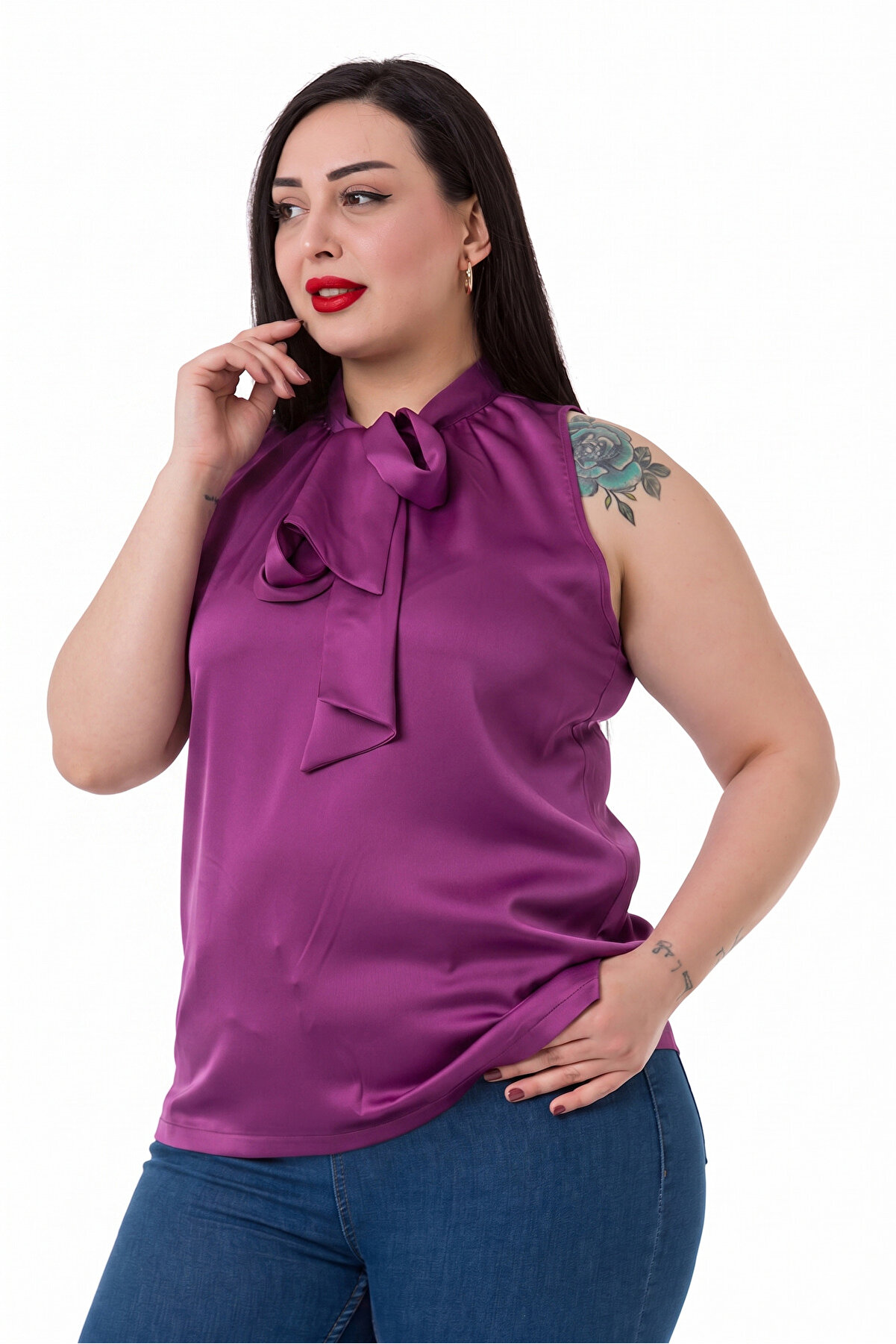
If you run a boutique in France or Belgium, you already know the problem: demand in sizes 44 to 62 is strong, constant and badly served. Customers say it themselves — they are not looking for special clothes, they are looking for the same clothes as everyone else, in their size, properly cut.
This guide is for owners who search for a plus-size wholesaler and find three pages of resellers. It explains the difference between buying from an intermediary and buying from a manufacturer, what sourcing from Turkey changes in terms of lead time and customs, and how to build a serious first order from $400.
Sizes 44-62: real demand, narrow supply
Plus-size is not a niche segment in France or Belgium. It represents a significant share of the adult population, and yet the range available in shops stays narrow above size 46. Large chains often treat plus-size as an extension of their main line: the pattern is scaled up from a 38, and it shows on the body.
For an independent boutique that is a rare opportunity — a segment where competition is thin not because demand is missing, but because supply is done badly. The condition is that your fit has to hold above size 48. That is where your difference lies, not in the choice of prints.
What your customers actually check
- Armhole and sleeve width — the number one complaint above size 50, and almost always a grading problem.
- Opacity under tension — a fabric that is opaque flat can turn transparent across the hip at size 54.
- Length — does a long dress stay long at size 58, or is the length identical across the whole range?
- Lining — graded to the same size as the shell, or one size smaller?
Those four points predict more returns than everything else combined. Ask for them in writing before confirming an order, whoever the supplier is.
Local wholesaler or manufacturer: what actually differs?
Both have their place, but they solve different problems.
A local wholesaler sells you from a nearby warehouse. Advantages: very short lead time, no import formalities, sometimes very flexible quantities. Drawbacks: the margin has already been taken, you buy what they chose to buy, and when a style works they usually cannot repeat it — they can only tell you it is finished.
A manufacturer sells its own production. Advantages: no intermediate layer in the price, access to real measurements and fabric details, and a style that works can be repeated. Drawbacks: you handle the import yourself, and there is a minimum order.
Our position is obvious since we are a manufacturer: we produce in our Istanbul workshop and have done since 1998, with more than 600 models in stock from size 34 to 60. What that changes for you is not only price — it is that when a blouse sells out in three weeks, you can have more before the season ends.
VAT and import: general orientation
An important note first: what follows is general information, not tax advice. Rules change and your position depends on your own registration. Check with your accountant or customs agent before your first order.
The useful outlines:
- EU–Turkey customs union. Textiles fall within it, and shipments are commonly accompanied by an A.TR movement certificate issued on the Turkish side. Your customs agent will ask for it.
- Import VAT. Due in the country of entry at the national rate. For a registered business it is generally recoverable through your normal return, but the mechanics and the cash-flow effect differ by regime — France and Belgium do not handle it identically.
- The OSS one-stop shop concerns your distance sales to consumers in other member states, not your import from Turkey. Keep the two apart in your bookkeeping; they are separate subjects.
- Ancillary costs. Forwarder, customs agent, handling and local delivery are each modest, but all belong in your landed cost.
Ask your supplier to confirm the A.TR travels with the shipment, and that the invoice, the packing list and the actual carton contents match exactly. A mismatch between those three is, everywhere, the leading cause of customs delay.
How long until you are delivered?
This is the most concrete argument for Turkey from a French or Belgian boutique's point of view. In-stock goods leave our workshop within 24 to 48 hours, and road transport into Western Europe then takes a few days — in practice, often 3 to 6 days end to end when clearance is straightforward.
Routes, seasons and border queues move that figure, so have your carrier confirm the current transit. But the order of magnitude is a week rather than a quarter, which completely changes how you replenish.
Sizing: reading 34-60 from France
Good news: Turkish numbering follows the continental European numbering used in France and Belgium. A Turkish 46 corresponds to a European 46. There is no exotic conversion to make, unlike with UK or US sizes.
Two cautions are still worth taking. First, never work from the label alone: ask for the flat measurements of the largest size you intend to stock, not of the sample size. Second, we sell in size sets — a pre-built size assortment rather than loose pieces — which is what keeps your rail balanced and speeds up picking.
Detailed equivalents are in our measurements guide, and the logic of sets is explained in what is a size set.
Building a first order at $400
Our minimum is $400 across the whole order. That is deliberately low: a first order should be information gathering, not a bet.
- Choose two or three styles in a category you already sell — blouses and tops are the safest entry point, since they rotate quickly and combine easily.
- Order in size sets, asking for a weighting towards the sizes you sell most if you already know them.
- Request in writing composition, weight, shrinkage and flat measurements of the largest size.
- Ship in one consignment: fixed transport and clearance costs are paid on every shipment.
- Record sales by style and size from day one; that record is what builds your second order.
Payment is made against a proforma invoice by bank transfer. You receive the proforma with full company details, style breakdown, quantities and weights.
Practical tip: on a first order, buy two or three styles with real depth rather than eight styles at one piece per size. You will learn what works, and your customers will find their size.
Catalogue and support in French
The site exists in a French version, so you can browse the catalogue and build your list in French rather than through an approximate translation. Conversation then continues on WhatsApp at +90 555 336 47 86.
One tip on message format: send style codes, quantities and sizes as a single list rather than in ten messages. It is faster for everyone and reduces errors — the method is set out in ordering efficiently on WhatsApp.
What to take away
Plus-size is a segment where fit makes the difference and where sourcing is the main obstacle. Buying directly from a Turkish manufacturer removes a margin layer, gives you access to real measurements, and makes it possible to repeat a style that works. A few days' transit into France and Belgium does the rest.
Start small, measure, and let your own sales decide what comes next.
Frequently asked questions
What is the difference between a wholesaler and a manufacturer in plus-size?
A wholesaler resells goods it bought itself, which adds a margin layer and limits repeats: when a style is finished, it is finished for good. A manufacturer sells its own production, can provide real measurements and fabric details, and can generally repeat a style that works. In exchange you handle the import yourself and there is a minimum order to meet.
How long does delivery from Istanbul to France or Belgium take?
In-stock goods leave within 24 to 48 hours, and road transport into Western Europe then takes a few days, which in practice often means 3 to 6 days end to end when the documents are in order. Routes, season and border queues all move that figure. Have your carrier confirm the current estimate before promising a date to a customer.
How does VAT work on an import from Turkey?
Import VAT is due in the country of entry at the national rate, and for a registered business it is generally recoverable through the normal return. The mechanics and the cash-flow effect depend on your regime and differ between France and Belgium. This is general information rather than tax advice, so confirm your own position with your accountant before the first order.
What is the A.TR certificate and who provides it?
The A.TR is a movement certificate used for goods traded between Turkey and the EU under the customs union, and your customs agent will ask for it on a textile shipment. It is issued and certified on the Turkish side, so tell your supplier the destination country before the proforma invoice is issued. Then confirm with your agent that the document is travelling with the goods.
Do Turkish sizes match French sizes?
Yes, Turkish numbering follows the continental European numbering used in France and Belgium, so a Turkish 46 corresponds to a French 46. That said, no numbering system guarantees fit: always request the flat measurements of the largest size you intend to stock rather than those of the sample size. Grading differences show up above size 48.
What is a size set and do I have to buy that way?
A size set is a pre-built assortment of sizes, the usual way wholesale works in Turkey, and it prevents you ending up with an unbalanced rail. It also speeds up picking and reduces errors. If your own sales history concentrates on particular sizes, say so when you order so the weighting can be discussed.
What is the minimum order and how is payment made?
The minimum is $400 across the whole order and can be spread over several styles, which makes a low-risk first test possible. Payment is by bank transfer against a proforma invoice that details the company, the styles, quantities and weights. In-stock goods are dispatched within 24 to 48 hours of payment confirmation.
Can I deal with you in French?
Yes, the site has a French version and you can build your order list directly from the catalogue in French. Conversation then continues on WhatsApp at +90 555 336 47 86. Send style codes, quantities and sizes as a single list rather than in successive messages — it is faster and it limits errors.